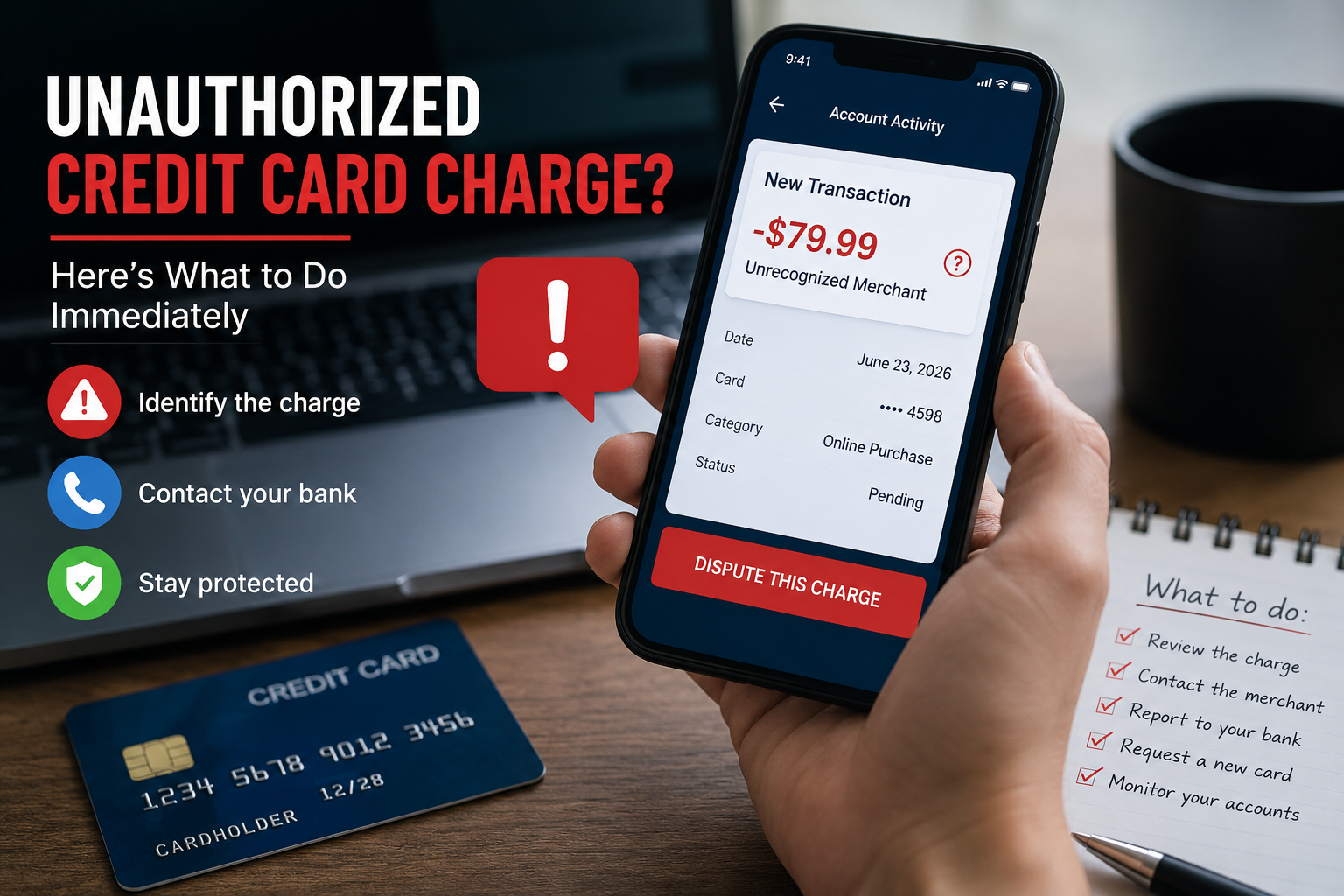
Unauthorized Charge on Your Credit Card? A Step-by-Step Recovery Guide
Finding an unrecognized charge on your bank statement can trigger an immediate sense of unease. Whether it is a small, odd amount like $14.99 or a significant transaction you know you never authorized, that moment of discovery is stressful.
The good news is that you are not powerless. Millions of people face this scenario every year, and there is a clear, proven path to resolving it. Whether it is a forgotten free trial, a cryptic billing name for a legitimate purchase, or actual unauthorized activity, following the right steps will help you recover your funds and secure your account.
Step 1: Stay Calm and Act Quickly
The most important asset you have when dealing with an unrecognized charge is time.
The Power of the FCBA: In the United States, the Fair Credit Billing Act (FCBA) gives you the legal right to dispute charges you believe are fraudulent or the result of a billing error. For credit cards, your liability for fraudulent charges is capped at $50—but in practice, most major issuers offer "zero-liability" policies, meaning you pay nothing for unauthorized activity.
Credit vs. Debit: If the charge appeared on a debit card, treat it as an urgent matter. Federal protections for debit cards have shorter reporting windows than credit cards. If you report the error within two business days, your liability is limited. If you wait longer, that liability can increase.
Pro-tip: For online shopping, credit cards offer a much stronger barrier between a merchant and your actual bank account. If possible, prioritize credit cards for web-based transactions.
Step 2: Decode the Merchant Name
Before you file a formal dispute, take 60 seconds to verify the transaction. Many "mystery" charges turn out to be legitimate purchases listed under a confusing name.
Parent Companies: A local store or online boutique might use a payment processor (like Stripe or PayPal) or a corporate parent name that bears no resemblance to the brand you actually shopped with.
Digital Subscriptions: Many apps and services bill under their legal business name, not the app icon on your phone.
How to verify: Copy the exact merchant name from your statement and search for it on Google alongside terms like "charge," "billing," or "who is this." Often, a quick search on forums like Reddit or consumer complaint sites will reveal that others have asked the same question, with a top comment clarifying exactly who the company is.
Step 3: Audit Your Subscriptions
The "forgotten free trial" is a major culprit for mystery charges. We live in an era of subscription-based services, and it is easy for a trial to end and convert into a paid membership without a clear reminder.
Search Your Inbox: Look for keywords like "trial ended," "membership," "subscription," or "annual fee."
Check Hidden Folders: Don't just check your primary inbox. Scour your "Promotions," "Social," and "Spam" folders.
If you find that you accidentally kept a subscription active, reach out to the company's support team immediately. Many businesses will issue a courtesy refund if you contact them right after the renewal charge, provided you haven't used the service.
Step 4: Consult Your Household
Before escalating, confirm that the charge didn't originate within your home. Does a partner, spouse, or child have access to your card, your saved browser payment details, or your account credentials? This is a common occurrence that often resolves the "mystery" instantly.
Step 5: Contact the Merchant Directly
If you’ve identified the merchant and realize the charge is an error—such as a double charge or a subscription that wasn't canceled correctly—reaching out to them directly is often the fastest path to a refund.
Keep a record of your correspondence: who you spoke with, the date/time, and the result. Note: If the charge is clearly a phishing site or a scam, do not contact them. Engaging with scammers can verify that your email or phone number is active.
Step 6: File a Formal Dispute
If you cannot identify the charge or have confirmed it is fraudulent, contact your card issuer immediately.
How to do it: Use the "Dispute this charge" option within your banking app, or call the number on the back of your card.
Why you’re disputing: Be clear about your reason (e.g., "I did not authorize this," "The goods were never delivered," or "I canceled this subscription").
What to expect: Issuers are required by law to acknowledge your dispute within 30 days and resolve it within two billing cycles. In most cases, you will receive a provisional credit while they investigate, so your available balance remains intact.
Step 7: Request a New Card Number
If a fraudulent charge has occurred, assume your card details have been compromised. Even if the current charge is small, the bad actor who obtained your number may try to use it again. Request a replacement card with a new primary number and CVV. While it requires updating your auto-pay services, it is the only way to ensure the threat is permanently closed.
Step 8: Identify the Source
Understanding how it happened helps you stay safe in the future:
Data Breaches: Use tools like Have I Been Pwned to check if your email has appeared in a known breach. If so, update your passwords immediately.
Physical Skimming: Have you used your card at an older, outdoor gas pump or an independent ATM recently?
Phishing: Be cautious of emails or texts that mimic legitimate shipping or banking sites.
Proactive Security Habits
Use Credit over Debit: Take advantage of the stronger fraud protection policies offered by credit card issuers.
Audit Weekly: Don't wait for your monthly statement. Review your transactions at least once a week to catch small, unauthorized "test charges" before they lead to larger issues.
Vet Your Shopping Sites: Before entering payment information on an unfamiliar website, take a moment to verify the site's legitimacy. Check for a clear business presence, valid contact info, and recent customer reviews.
Frequently Asked Questions (FAQ)
Will I lose money if I dispute a charge? In almost all cases, no. Under federal law, you are not responsible for unauthorized credit card charges. Most issuers provide a provisional credit while they investigate.
Should I call the police? For minor unauthorized charges, the police usually cannot intervene. However, if you are the victim of widespread identity theft (e.g., your Social Security number was used), you should file a report at IdentityTheft.gov.
How long does the process take? By law, issuers have up to two billing cycles to resolve a dispute, though many are resolved within a few business days.
What if the merchant denies my refund? If you talk to a merchant and they refuse to refund an clearly unauthorized charge, stop communicating with them and provide your records of the failed attempt to your credit card issuer when you file your formal dispute.
Final Thoughts
Your financial security is a top priority. While finding an unknown charge is never pleasant, the systems designed to protect you are robust and highly effective. By staying vigilant and acting quickly, you can ensure that your hard-earned money remains protected.