How to Help Your Parents (and the Rest of Your Family) Avoid Online Scams Without Being Annoying About It
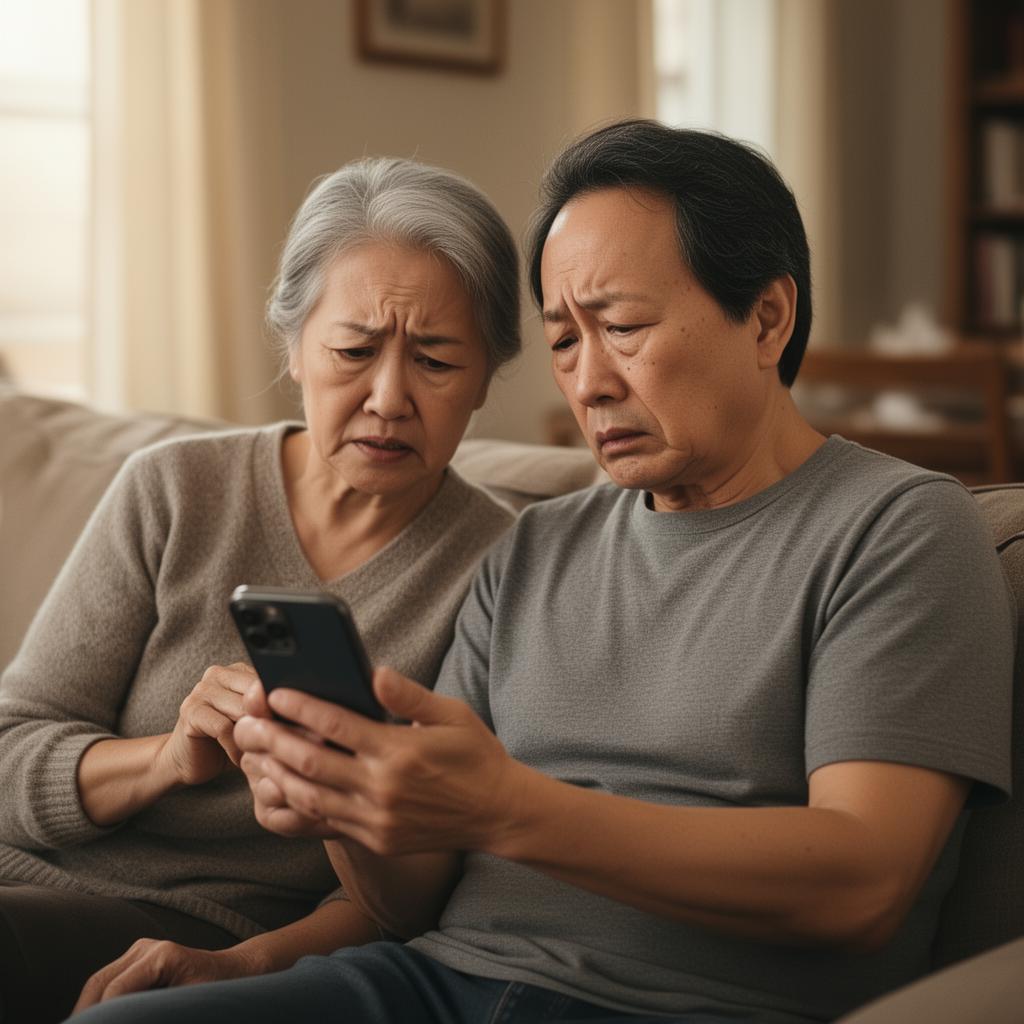
The first time my mother almost got scammed, she called me from the supermarket parking lot in tears.
Someone had texted her, pretending to be from her bank, saying her account had been "compromised" and she needed to confirm her card details right away. She had clicked the link. She had typed in her card number. She was halfway through entering the security code when something — she still can't tell me what exactly — made her stop and call me first.
We cancelled the card before any charges went through. She was lucky. A lot of people in that situation aren't.
I had spent years telling her, in a slightly tired voice, that "you shouldn't click links in text messages." She knew. She knew the way you know not to touch a hot stove. And in the moment, with her heart racing and the message looking real and the bank's logo right there at the top, none of it mattered.
That phone call changed how I talk to my family about online safety. I stopped lecturing. I stopped sending them articles with subject lines like "PLEASE READ THIS." I started doing something that actually works.
This is what I learned, in case it helps you with the people in your life.
Why lectures don't work
Most of us, when we want to help a parent or older relative stay safer online, default to the same approach: we tell them the rules.
Don't click links in emails. Don't give your password to anyone. Don't trust calls from people claiming to be from Microsoft. Don't wire money to strangers. Don't, don't, don't.
The problem isn't that the advice is wrong. The advice is fine. The problem is that scams don't feel like the situations the advice describes. They feel like normal moments — a text from your bank, an email from the tax office, a call from your grandchild — until you're already several steps in. By the time the warning signs are obvious, the emotional hook is already set.
You can't lecture someone out of an emotional hook. You have to give them a habit they can fall back on when they're stressed, scared, or distracted. That's a completely different project.
There's also something else worth being honest about. When we lecture our parents, we often come across as condescending, even when we don't mean to. They raised us. They paid taxes and ran households and made decisions that affected our entire lives long before any of this existed. Being talked to like a child by their own child is humiliating, and humiliation makes people defensive, not careful.
So step one is to stop lecturing. Step two is to figure out what to do instead.
Start with a story, not a rule
The single most effective conversation I've ever had with my mother about online safety started with me telling her about a time I almost got scammed.
I told her the whole embarrassing story. The fake online store, the boots I almost bought, the moment I noticed the wrong address at the bottom of the checkout page. I made myself the person who nearly fell for it. I didn't position her as the one who needed protection.
Something shifted. She stopped being defensive. She started telling me about a weird email she'd gotten the week before. She asked me to look at a text she wasn't sure about. We were suddenly two adults sharing notes instead of a parent and child arguing about whether she was being "careful enough on her phone".
If you want a starting point with the people in your life, start there. Tell them about a close call you had, or a friend's close call, or even one of the stories you've read. Make the danger feel real and shared. Don't make them the example.
Make the safe action easier than the scam
The second thing that actually moved the needle was making it easier for my parents to check something than to just hope it was fine.
I sat with my mother for twenty minutes one Sunday afternoon and we did three things together. We bookmarked the free website checker on her phone's home screen. We saved my number under "Call me first" as a contact she pinned to her favourites. And we agreed on a single sentence she could use whenever something felt off: "I'll check and call you back."
Want to set this up for someone you love? Open our free website checker → and bookmark it on their phone — one tap, plain-language results, no account needed.
That last one is the most important. Scams work by collapsing time. The texts and emails and calls all push you to act right now, before you have time to think. A single sentence — "I'll check and call you back" — is enough to break the spell. It doesn't matter if the caller is rude about it. The whole point is that real banks, real tax offices, real delivery companies, and real family members are never bothered by you taking a few minutes to verify something.
Now whenever my mother gets a suspicious message, she has a tiny path of least resistance. She opens the bookmark. She pastes the link. She reads the plain-English result. If it's still unclear, she calls me. The whole thing takes ninety seconds and it has interrupted at least three scams in the last year that I know of.
The conversation script that actually works
If you want to have this conversation with someone in your family this week, here is the rough shape that has worked for me. Adapt the words; the structure is the part that matters.
Start by acknowledging that scams have gotten much harder to spot. Not "you need to be careful". Something more like: "The scams these days are getting really good. Even I almost fell for one last month." This puts you on the same side of the table.
Then offer a small, specific tool, not a list of rules. "There's this free website checker I've started using before I buy anything from a store I don't know. Want me to put it on your phone so you have it too?" You're offering help with a single concrete thing, not enrolling them in a new lifestyle.
Then introduce the pause sentence. "If you ever get a message that's pressuring you to do something right away — a bank, a delivery, a tax thing — just say 'I'll check and call you back' and then call me. No matter who it is. If it's real, they'll wait. If it's a scam, they'll vanish, which tells you everything." Make it a rule about everyone else, not about them.
Finally, and this is the part most people skip — thank them in advance for calling you. "Honestly, I'd rather you call me ten times about nothing than not call once when it's real. You're not being annoying. You're being smart." This single sentence removes the biggest blocker, which is the fear of being a burden.
The four scams worth specifically warning them about
If you have to pick a small number of scams to mention by name, these are the ones currently causing the most damage to ordinary people. I keep this list short on purpose. Long lists make people glaze over.
The fake bank or card-issuer text. "Your account has been locked / compromised / flagged. Confirm your details here." Real banks do not send links to confirm details by text. Ever. If a message has a link in it and asks for any kind of confirmation, treat it as fake until proven otherwise. The safe action is always to open the bank's app or website yourself, the way you normally do, and check from there.
The delivery company "missed package" text. "Your parcel could not be delivered. Pay a small fee to reschedule." The fee is tiny — often a dollar or two — which makes people careless. The point isn't the dollar. The point is to get a card on file that they can then charge for hundreds. Never pay a redelivery fee from a text link. Go to the courier's actual website if you're expecting something.
The "grandparent" or "family emergency" call. Someone calls claiming to be a grandchild, a niece, a nephew — in trouble, in jail, in hospital, in another country, and they need money fast. Often the voice sounds slightly off, which scammers now blame on a bad connection or a sore throat (or, increasingly, fake with AI voice cloning). The rule is simple: hang up and call the family member back directly on the number you already have for them. Always. Even if it feels rude. Especially if it feels rude.
The "tech support" pop-up or call. A scary message appears on the computer saying it's been infected and to call a number, or someone calls claiming to be from Microsoft or Apple. No real tech company calls you. No real virus warning asks you to phone a number. The safe action is to close the browser, restart the computer, and if anything still seems wrong, ask a family member or a real local repair shop in person.
If your parent can hold those four patterns in mind, they will recognise eighty percent of the scams that will ever come their way.
What to do once, so you don't have to do it again
There are a few small setup things that pay back forever. Spend a Saturday afternoon on these once and you'll save yourself and your family a lot of grief later.
Turn on two-factor authentication on their email, especially. Email is the master key to almost everything else — if a scammer gets into your mother's email, they can reset every other password she has. Two-factor is the single highest-leverage security setting in existence. Set it up while you're sitting next to her.
Set up alerts on their credit cards and bank accounts so they get a text every time a charge over a certain amount is made. Most banks let you do this in their app. It turns "I might not notice for weeks" into "I notice within a minute", which is the difference between losing $40 and losing $4,000.
Make sure they have your number, your sibling's number, and maybe one trusted friend's number written down somewhere physical, not just in their phone. If their phone gets compromised or lost, they need a way to reach a trusted person without it.
Bookmark the free website checker on their phone's home screen so it's one tap away. The reason I keep mentioning this is that it's the only check most non-technical people can realistically do in the moment, and the easier you make it, the more often they'll actually use it.
Try it now and bookmark it: Check any website for free → — paste a link, get a clear safety verdict in seconds.
What to do when they do get scammed
Some of them will. Even with all of this. The scams are very good, and everyone has a bad day eventually. When it happens, the most important thing you can do is not make them feel stupid.
They already feel stupid. They feel ashamed, embarrassed, angry at themselves, and afraid you're going to be disappointed in them. Every conversation you have in the first 48 hours should be about action, not about how it happened. Plenty of time for the post-mortem later, gently, after the immediate damage is contained.
The first calls are: their bank or card issuer, to cancel the card and dispute any charges. Then their email provider, to change the password and check for any forwarding rules a scammer may have set up. Then the platform where the scam started, to report it.
We have a longer step-by-step guide for the immediate aftermath: What to do if you entered your details on a scam website. Bookmark it for them now, so it's there if they ever need it. They probably won't. But the day they do, you'll be glad it took you thirty seconds to set up.
The thing I wish I had understood sooner
Helping the people in your life stay safer online isn't really about teaching them rules. It's about being someone they're not afraid to call.
My mother almost lost a lot of money because she was raised in a generation that doesn't want to bother their kids. She would have figured out the bank scam was fake eventually — but maybe not before she had entered the security code, and maybe not before the next message, and the one after that. The thing that saved her wasn't a lecture I had given her years earlier. It was a quiet permission to call me about anything, any time, even if it turned out to be nothing.
If you do nothing else after reading this, do that one thing. Call the people in your life. Tell them a scam story of your own. Tell them you'd rather they call you ten times about nothing. Put one good tool on their phone. Agree on one sentence they can use to buy themselves time.
You'll prevent more scams that way than any article ever will.
Frequently asked questions
My parents don't think they'd ever fall for a scam. How do I bring it up?
You don't bring it up as a warning. You bring it up as a story. "Hey, the weirdest thing happened to me / a friend / someone at work — let me tell you about it." Most people who insist they'd never fall for a scam soften the moment they hear a believable story from someone they trust. Lead with the story; let the lesson land on its own.
What if they already use a password manager / antivirus / whatever?
Great. That covers a lot of the technical surface. But almost every modern scam targets the human, not the machine — it tricks the person into typing their own password into a fake page, or wiring their own money to a fake account. Tools don't protect against that. Habits do. The conversation is still worth having.
Is it okay to take over their accounts to "protect" them?
In almost every case, no. Taking over removes their independence, makes them dependent on you for everything, and tends to breed resentment. What works better is being available — they call you before doing anything financial they're unsure about, and you spend a few minutes helping them check. That keeps them in charge of their own life while still giving them backup.
What if I live in a different country or time zone?
The pause sentence still works. "I'll check and call you back" doesn't require you to be reachable instantly — it just requires the scammer to lose access to the moment. Most scams collapse the second the target steps away. Even an hour of delay before they can reach you is usually enough to kill the scam.
Any one tool you'd actually recommend?
Yes, the one I keep mentioning — bookmark a free website checker on their home screen so they can paste in any link they're suspicious of and get a plain-language answer. It's the single tool that fits most naturally into a non-technical person's day, because it answers a question they're already asking themselves: "is this site real?"
Online safety is a habit, not a one-time setup. Always do your own research, and when in doubt, ask someone you trust before clicking, paying, or sharing anything.